
DISPONIBLE
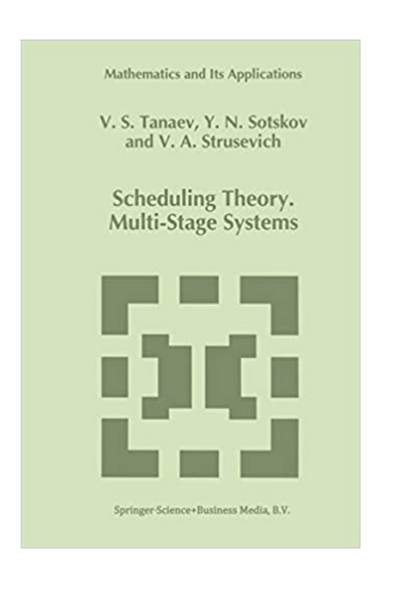
Scheduling theory: multi-stage systems (mathematics and its applications
$399.000
An increasing interest to scheduling theory can be attributed to the high level of automation of all branches of human activity. the quality of modern production essentially depends on the
Accesos rápidos
Selección curada
Libros reales conectados a tu inventario.
Compra asistida
WhatsApp, transferencia o Mercado Pago.
Pago seguro
Transacciones protegidas y confiables.
An increasing interest to scheduling theory can be attributed to the high level of automation of all branches of human activity. the quality of modern production essentially depend...
Ideal para lectores que buscan sin categoría, y también para quienes siguen el trabajo de Varios Autores.
Lo más valioso de esta edición es su combinación de ficha clara, navegación rápida y datos bibliográficos visibles en un solo lugar.
Autor: Varios Autores
Editorial: Springer
Categoría: Sin categoría
An increasing interest to scheduling theory can be attributed to the high level of automation of all branches of human activity. The quality of modern production essentially depends on the planning decisions taken at different stages of a production process. Moreover, while the quality of these decisions is improving, the time and flexibility requirements for decision-making are becoming more important. All this stimulates scheduling research. Started as an independent discipline in the early fifties, it now has become an important branch of operations research. In the eighties, the largest Russian publishing house for scientific literature Nauka Publishers, Moscow, issued two books by a group of Byelorussian mathematicians: Scheduling Theory. Single-Stage Systems by V. S. Tanaev, V. S. Gordon and Y. M. Shafransky (1984) and Scheduling Theory. Multi-Stage Systems by V. S. Tanaev, Y. N. Sotskov and V. A. Strusevich (1989). Originally published in Russian, these two books cover two different major problem areas of scheduling theory and can be considered as a two-volume monograph that provides a systematic and comprehensive exposition of the subject. The authors are grateful to Kluwer Academic Publishers for creating the opportunity to publish the English translations of these two books. We are indebted to M. Hazewinkel, J. K. Lenstra, A. H. G. Rinnooy Kan, D. B. Shmoys and W. Szwarc for their supporting the idea of translating the books into English
Sin descripción disponible
No encontramos una descripción editorial para esta edición todavía.
No pudimos cargar la descripción
La sección falló al cargar. Puedes reintentar sin salir de la página.
Sin detalles adicionales
No encontramos atributos técnicos extra para este libro.
No pudimos cargar los detalles
La ficha técnica quedó pendiente. Reintenta cuando quieras.
Sin preguntas registradas
Cuando tengamos dudas frecuentes reales, las verás aquí.
No pudimos cargar las preguntas
La sección falló al cargar. Puedes reintentarlo cuando quieras.
Aún no hay opiniones
Cuando existan reseñas verificadas, aparecerán en esta sección.
No pudimos cargar las opiniones
La sección quedó temporalmente indisponible. Intenta de nuevo.
Explora más libros
Puedes continuar navegando por el catálogo completo.
No pudimos cargar esta selección